

For I know the thoughts that I think toward you," says Yahweh, "thoughts of peace, and not of evil, to give you hope and a future.
Public domain · Read the whole chapter (KJV)
Jeremiah 29:11 promises the exiles in Babylon that God will give their community a future. The same letter tells them to plant gardens: the wait will be long enough to grow things.
On this page
The promise arrives in a letter to displaced people
Jeremiah sent this letter from Jerusalem to people who had been taken captive to Babylon. The opening verses name elders, priests, prophets and other members of the community. They were living far from home under the power of the empire that had uprooted them.
God addresses those captives through Jeremiah. That gives the word 'you' an audience: a community whose future looked uncertain. Verse 11 assures them that exile will not be the end of their story. In verse 14, the promise becomes specific: God will gather them and bring them back.
The letter also warns against prophets who are speaking falsely in God's name. Hope has to survive an unwelcome truth about how long the people will remain in Babylon.
Read the seventy years beside the promise
The sentence immediately before Jeremiah 29:11 speaks of seventy years for Babylon, followed by God's promise of return. Read together, verses 10 and 11 place a hopeful future beyond a long period of exile.
That timescale changes how the promise sounds. It reaches across generations. It cannot mean that every person hearing the letter will soon get the life they hoped for. God's commitment is to the future of his people, including children and grandchildren who will inherit that future.
The seventy years belong to this promise about Babylon. For someone waiting for a job, a relationship or an answer to prayer, the passage shows God's faithfulness through a long wait. It supplies no personal countdown.
What do peace, prosperity and an expected end mean?
Readers often know this verse through the wording 'plans to prosper you.' The WEB and KJV use 'thoughts of peace.' In the letter, that peace has a community's life in view: homes, food, families, prayer and eventual restoration. Reducing it to money or career success would leave most of the chapter out.
Verse 7 gives the promise a demanding companion. The exiles must seek the peace of the city where they now live and pray for it. Their neighbors' well-being matters to their own, even in Babylon. Peace involves how they live among other people while they wait.
The KJV ends verse 11 with 'an expected end'; the WEB says 'hope and a future.' Here, 'end' points to an outcome ahead. Verses 10 and 14 describe that outcome as return from captivity. The phrase gives the displaced community something to look toward.
Why Jeremiah tells them to plant gardens
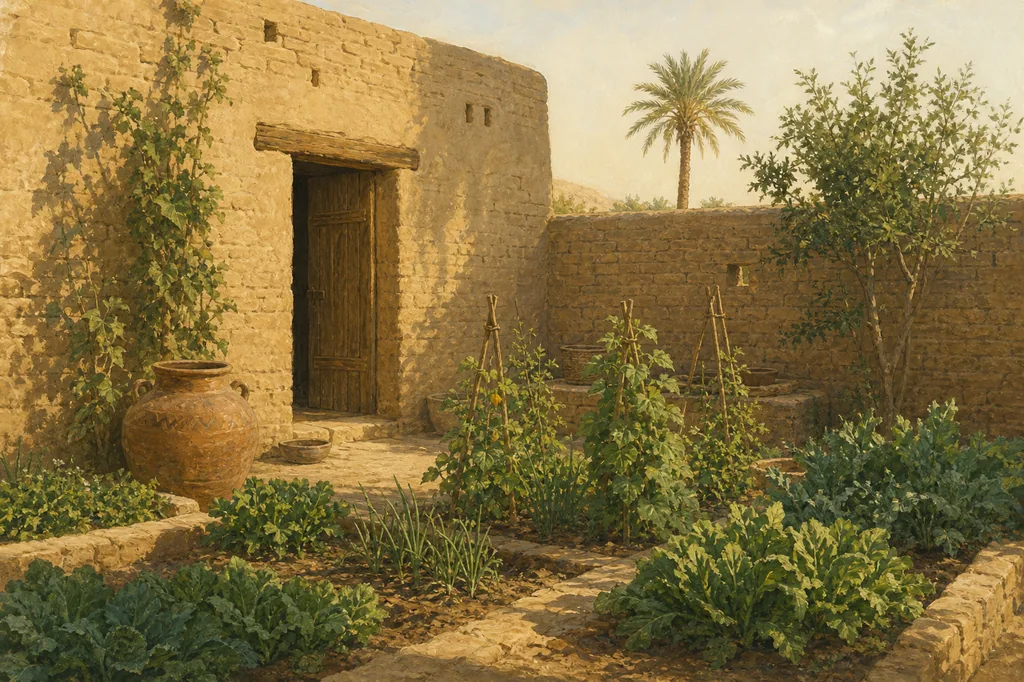
Before he speaks about the future, Jeremiah gives instructions for the present: build houses, plant gardens, eat what grows and raise families. These are commitments that take time. A garden needs tending long before it yields food.
The promised return gives them a reason to keep living. They can make a home, care for their children and contribute to the city without giving up their hope of going back. Waiting still contains work worth doing.
That detail makes this a useful passage to read alongside the Bible's teaching on patience during a long wait. Jeremiah's exiles are asked to take responsibility for the life in front of them while trusting God with the future.
How Christians can draw hope from it today
Christians read Jeremiah 29:11 as testimony to God's faithfulness: he remains concerned for his people through judgment, displacement and uncertainty. Its original promise of return belongs to the exiles. Its account of a God who hears prayer and keeps his word gives later readers reason to trust him.
The next verses are especially worth keeping close. In verses 12 and 13, the people are invited to pray and seek God wholeheartedly. They can turn toward him from Babylon, before their circumstances change.
For someone waiting to find work, a practical response might be to pray honestly about the fear, keep sending applications and accept help from a friend. The verse does not identify which employer will say yes. It encourages a life of trust that still has something to do this afternoon.
If words are hard to find, begin simply: 'God, I don't know what comes next. Help me do today's work and care for the people around me.' Our guide to beginning a prayer with the words you have offers a place to start.
Frequently asked questions
Who is God speaking to in Jeremiah 29:11?
God is speaking through Jeremiah to the people taken from Jerusalem into exile in Babylon. Jeremiah 29:1-4 identifies the recipients. The promise concerns that community's future and its eventual return.
Does Jeremiah 29:11 promise that my plans will succeed?
It promises God's faithfulness to the exiled community and a future beyond captivity. It does not guarantee a particular job, relationship or financial outcome. Christians draw encouragement from God's care while continuing to pray and act faithfully amid uncertainty.
What does an expected end mean in Jeremiah 29:11 KJV?
It means a hoped-for outcome or future. The surrounding verses describe God's promise to bring the exiles back. The World English Bible expresses the phrase as 'hope and a future.'
Can I use Jeremiah 29:11 in a graduation message?
Yes. Share it as encouragement to trust God through an uncertain future. A message about faithful work, prayer and hope fits the letter better than a prediction that every ambition will come true.