

The Bible calls people to forgive as God has forgiven them. Jesus pictures the stakes with a cancelled debt: a servant receives extraordinary mercy, then refuses to pass it on.
On this page
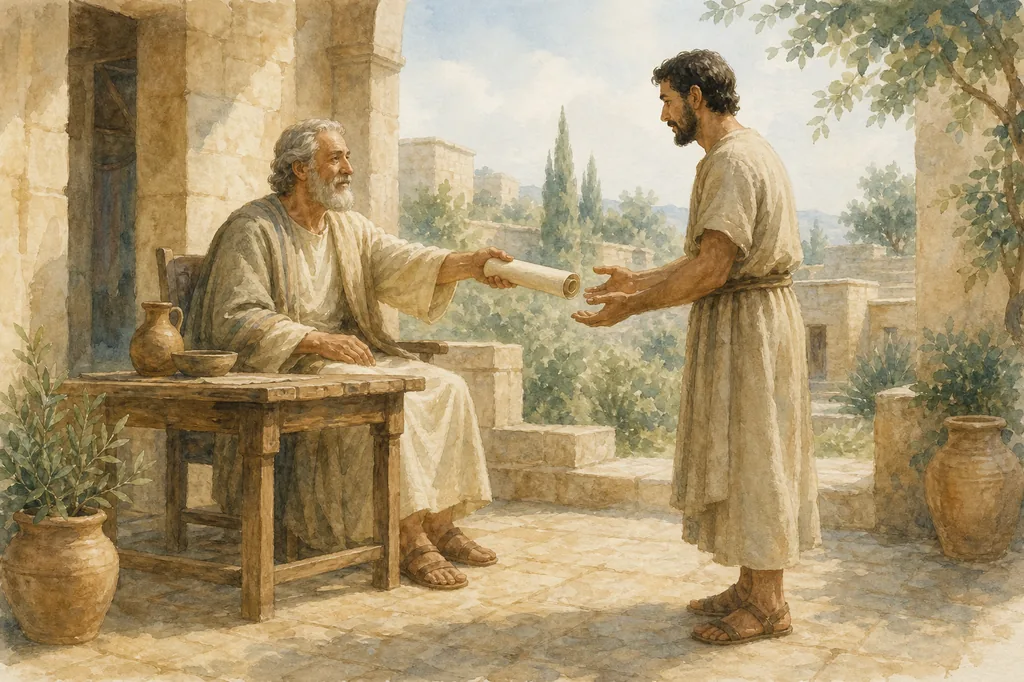
A forgiven servant demands his money
In Matthew 18:21-35, a king settles accounts with a servant who owes ten thousand talents. The man cannot pay. Facing the loss of his household and everything he owns, he begs for more time. The king gives him far more: he releases him and cancels the debt.
Then the servant finds a fellow servant who owes him a hundred pence, in the King James translation. He grabs the man by the throat and demands payment. The second man asks for patience in almost the same words the first man used. This time there is no mercy. He is sent to prison.
The king hears what happened and calls the first servant back. Having received such compassion, why did he refuse it to someone else? The story ends in judgment, and Jesus applies its warning to people who refuse to forgive from the heart.
Forgiveness releases a real claim against someone who has wronged you. The debt in the story actually existed. Mercy changes what the creditor does about it. Jesus makes that costly generosity the picture of how people who have received God's mercy should treat one another.
God's mercy gives forgiveness its starting point
Ephesians 4:32 tells Christians to be kind and tenderhearted, forgiving each other as God has forgiven them in Christ. Paul grounds the command in mercy they have already received. The person who needs your forgiveness stands before someone who has needed it too.
First John 1:8-10 brings that need into the open. Claiming to be without sin deceives us; confessing it meets a God who is faithful to forgive and cleanse. Confession lets you name the wrong without spending the whole conversation defending yourself.
If you lied, the truth might sound embarrassingly simple: you wanted to look better, avoid a consequence, or get your own way. You can admit that to God. You can also correct what you told the person who trusted you. Forgiveness gives you somewhere to bring the truth, and changed conduct gives the other person something solid to see.
Jesus joins receiving and extending mercy in the Lord's Prayer. In Matthew 6:12, asking God to forgive our debts comes with forgiving our debtors. The warning immediately afterward makes the connection serious. We cannot comfortably ask God for mercy while making mercilessness our settled way of treating others.
Peter asks when he can stop forgiving
The debt story begins with Peter asking how often he should forgive a brother who sins against him. Would seven times be enough? Jesus answers with seventy times seven in the King James translation; some translations render it seventy-seven times. Either way, the answer overturns Peter's attempt to set a small limit.
Treating the answer as permission to stop at offense number 491 misses the force of the parable that follows. Jesus asks for mercy that reaches the heart. A person can announce that they forgive while keeping the old injury ready to use in every later argument.
Luke 17:3-4 also imagines repeated wrongdoing, even seven times in a day. Jesus tells his followers to rebuke the wrong and forgive the person who returns in repentance. Both instructions belong in the same conversation. Naming what happened can be part of loving someone; receiving an honest return can be part of it too.
Repeated forgiveness asks a lot when the apology is familiar. It also asks something of the person apologizing. Ephesians 4 surrounds its command to forgive with changed behavior: tell the truth, stop stealing, speak in ways that help others. Mercy belongs in a community where people are learning to treat one another differently.
Forgiveness leaves room for truth and accountability
Romans 12:17-21 tells Christians to give up personal revenge, pursue peace as far as possible, and do good even to an enemy. Feeding someone who is hungry is a concrete act. Paul gives injured people something better to do with their power than returning the injury.
That does not require a false account of the past. A betrayed friend can forgive and still need time before sharing another confidence. A person who stole can be forgiven and still owe restitution. Trust concerns what someone can safely rely on now; rebuilding it requires trustworthy conduct.
Where harm continues, telling the truth and seeking protection remain necessary. Forgiveness does not require hiding abuse, declining to report a crime, or returning to danger. An apology gives nobody a right to renewed access to the person they hurt. Reconciliation requires participation and change that one person cannot supply for both.
Nor does forgiveness make memory obey a command. You may choose against revenge and still feel the hurt when a familiar date or place brings it back. That pain is something you can bring to God and to someone trustworthy. The work of patience may be especially ordinary here: refusing to turn a returning memory into a fresh act of retaliation.
Jesus' servant had just walked away from a debt he could never settle. He still had a choice when he met the next man. What would that encounter have looked like if he had remembered the mercy he had just received?
Frequently asked questions
Does the Bible say to forgive and forget?
The Bible commands forgiveness, but it does not require people to erase their memories. Luke 17:3 allows a wrong to be named, and Romans 12 calls people away from revenge. Remembering what happened can help you make wise decisions while choosing not to retaliate.
Do I have to forgive someone who never apologizes?
Luke 17:3-4 connects forgiveness with repentance, while Romans 12 forbids personal revenge even against enemies. Christians differ over how they describe forgiveness before repentance. You can give up revenge and remain open to an honest return without pretending the relationship has been repaired.
What is a good Bible verse about forgiveness?
Ephesians 4:32 connects kindness, tenderheartedness, and forgiving one another with the forgiveness God gives in Christ. Read it alongside Matthew 18:21-35, where Jesus tells the story of a forgiven servant who refuses mercy to someone else.
Does feeling hurt mean I have not forgiven?
Pain can return even when you have chosen to forgive. Forgiveness is not a promise that a memory will stop hurting immediately. The biblical call is to turn from revenge toward mercy; grief, honest conversation, and rebuilding trust can still take time.