

Catholics and Protestants can say the same creed on Sunday and mean different things when they break bread. Both trust in Jesus Christ. They differ over what happens at Communion and who can settle a question of faith.
On this page
| Topic | Catholic | Protestant |
|---|---|---|
| Final authority | Scripture and apostolic tradition, interpreted by the pope and bishops together | Scripture is the final standard for church teaching |
| Church leadership | Pope, bishops, priests, and apostolic succession | Anglicans have bishops, Presbyterians elect elders, and Baptists govern locally |
| Salvation | By God's grace, received through faith, lived out in love, and nourished through the sacraments | By God's grace through faith in Christ; good works follow as fruit of faith |
| Sacraments | Seven sacraments | Most observe baptism and the Lord's Supper |
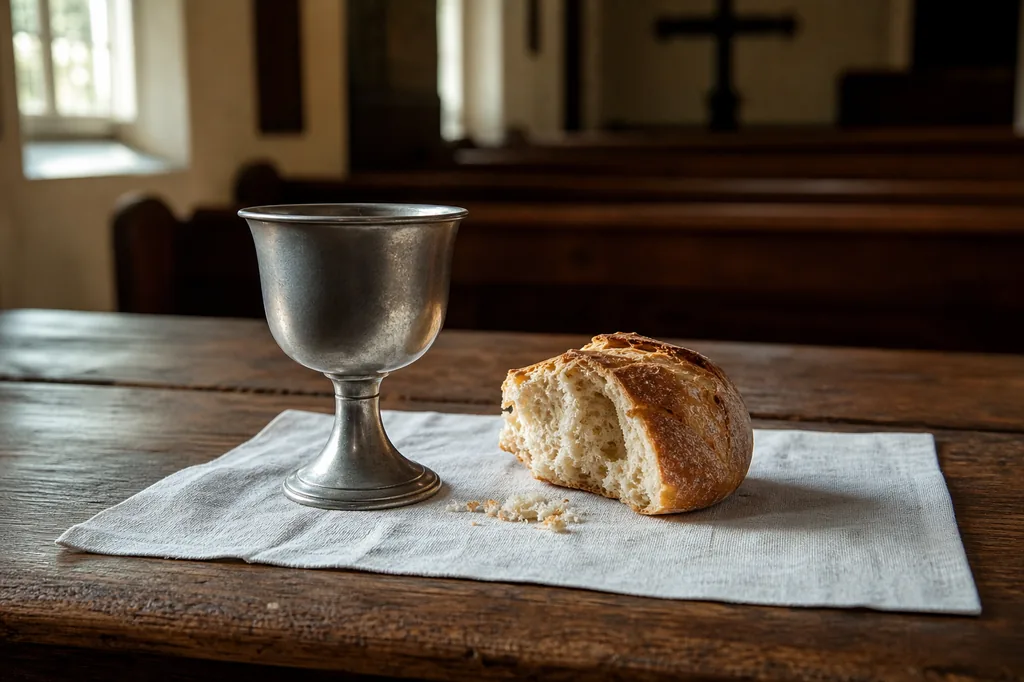
| Communion | The bread and wine become Christ's body and blood | Lutherans affirm Christ's bodily presence. Southern Baptists describe a memorial meal. |
| Mary and saints | Mary and the saints may be honored and asked to pray for believers | Most honor Mary as Jesus' mother and address their prayers to God |
| Bible canon | 73 books, including the deuterocanonical books | 66 books; the deuterocanonical books are usually called the Apocrypha |
What you might hear in both churches
Visit a Catholic parish and a Lutheran church on Easter and you may hear the same words from the Nicene Creed. Both congregations confess that Jesus rose from the dead. They baptize in the name of the Father, Son and Holy Spirit, read the Gospels aloud and pray the Lord's Prayer.
Then comes Communion. The priest or pastor recalls Jesus taking bread at his last meal with his disciples. Even churches that use almost identical words can give different answers when a visitor asks what they are about to receive.
What happens to the bread and wine?
At a Catholic Mass, the priest consecrates bread and wine. Catholics believe they become Christ's body and blood, even though they still look and taste like bread and wine. The name for that change is transubstantiation. The Eucharist is one of seven sacraments, alongside baptism, confirmation, penance, anointing of the sick, holy orders and marriage.
A Lutheran can also say that the communicant truly receives Christ's body and blood. The Augsburg Confession teaches that Christ gives himself in the Supper. In a Southern Baptist church, the congregation shares bread and the cup to remember Jesus' death and look forward to his return. A Presbyterian might describe the same meal as a way the Holy Spirit feeds believers with Christ.
If you visit, ask the priest, pastor or usher who is invited to receive Communion. You can stay in the pew and pray while others go forward.
Who settles a disagreement about the Bible?
Catholics understand Scripture and sacred tradition as two ways the apostles handed on the faith. When a dispute arises, the pope and the bishops in communion with him interpret that inheritance. Catholics call this teaching office the Magisterium.
The Protestant reformers put Scripture first when deciding a question of faith. A pastor may teach from a catechism and a congregation may recite an ancient creed, but the church must be able to defend its teaching from the Bible. This is what Protestants mean by sola scriptura, or Scripture alone.
Open the two Bibles and you'll find a difference there, too. Both contain the same 27 New Testament books. A Catholic Old Testament includes Tobit and Wisdom, for example, alongside Genesis and Isaiah. See which books appear in each Bible for the full breakdown.
Can a person earn salvation?
Catholics and Protestants answer no. Both understand salvation as a gift from God through Jesus Christ. The Reformation dispute concerned justification, the way God puts a sinner right with him.
Lutherans teach that a person receives God's forgiveness through faith alone. Good works follow from that faith. Catholics describe justification as both forgiveness and an inward renewal: God's grace enables people to love their neighbors and grow in holiness.
In 1999 the Catholic Church and the Lutheran World Federation signed a declaration together. They agreed that God accepts people by grace through faith in Christ and that their own achievements cannot earn that acceptance. They still explain differently how a believer cooperates with grace.
Why Catholics ask Mary to pray for them
The closing words of the Hail Mary ask Mary to pray for the person speaking, now and at the hour of death. Catholics believe the saints are alive in Christ and can pray for others. They reserve worship for God.
Most Protestants direct prayer to God through Christ. They read Mary's song in Luke 1 as an example of faith and praise. When they need someone to pray for them, they would ordinarily ask another member of their congregation.
How the Reformation changed local churches
In 1517 Martin Luther challenged the preaching of indulgences, which concerned the consequences of sins already forgiven. The dispute widened into a question of authority: could a reformer appeal to Scripture against the judgment of church leaders? Other reformers, including John Calvin and Huldrych Zwingli, also pressed for change. Catholic bishops gathered at the Council of Trent to answer disputed teachings and reform church life.
The churches that grew out of the Reformation took different shapes. An Anglican bishop oversees a diocese. Presbyterian congregations elect elders who share responsibility with ministers. A Baptist congregation typically calls its own pastor. When someone tells you they grew up Protestant, asking which church they attended can tell you a great deal about what Sunday was like.
Frequently asked questions
Are Catholics and Protestants both Christians?
Yes. Catholics, Lutherans, Baptists and other Protestant Christians worship Jesus Christ as Lord and confess his death and resurrection. Protestant is a family name for several Christian traditions.
Do Protestants recognize the pope?
Protestants recognize the pope as the leader of the Catholic Church. Their own churches look to different authorities for decisions about doctrine, worship and leadership.
Can a Protestant attend a Catholic Mass?
Yes. Visitors are welcome to attend, listen to the readings and join in the prayers. The Catholic Church ordinarily reserves Communion for Catholics who are prepared to receive it. Visitors can remain seated during Communion.