

The Bible meets loneliness with God's presence and human companionship. Paul asked Timothy to come even as he affirmed God's help: an apostle still wanted a friend in the room.
On this page
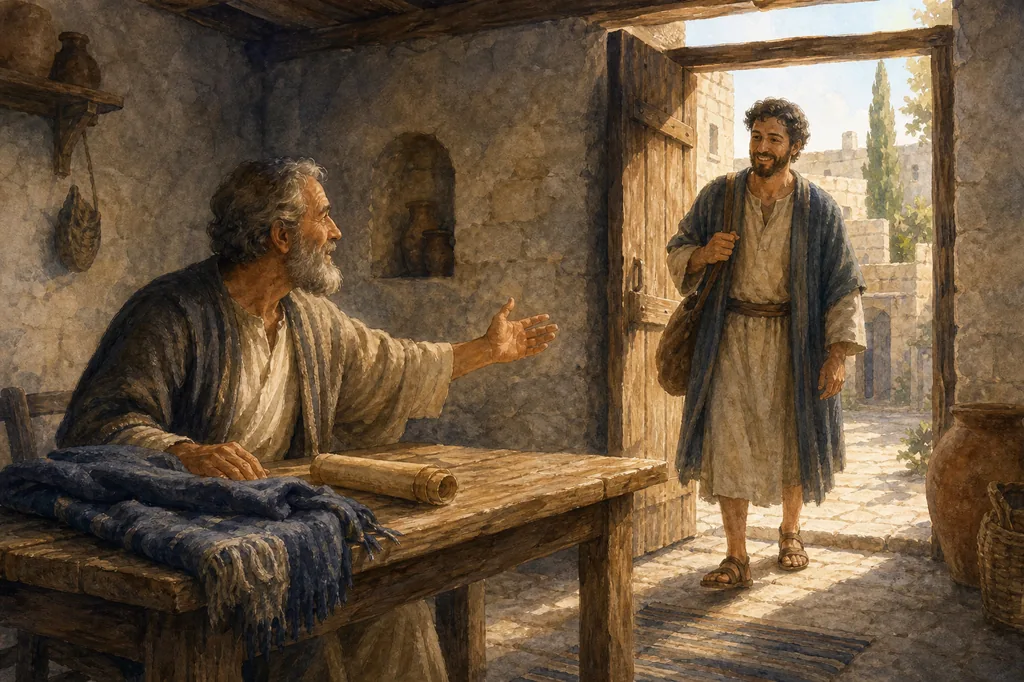
Paul trusted God and still wanted Timothy to come
Near the end of 2 Timothy, the letter turns to visits, a missing cloak, and books. Paul asks Timothy to come soon. Bring Mark. Bring the cloak he left behind. Bring the books, especially the parchments. These are the requests of someone who wants familiar people and familiar things close by.
The details make the loneliness sharper. Demas has deserted him. Others have gone elsewhere, including Tychicus, whom Paul sent to Ephesus. Luke is still with him. At his first defense, though, no one stood beside him. Paul remembers that abandonment and prays that it will not be held against them.
Then comes his affirmation: "the Lord stood with me, and strengthened me" (2 Timothy 4:17, KJV). In the same passage, he is certain of God's help and eager for Timothy's company. He sees no reason to hide either need.
That is a useful passage when someone tells you that trusting God should make you content without friends. Paul asks for a visit. You can ask too. A message as plain as 'I've been lonely this week. Could we have dinner?' gives another person a way to show up.
A lonely prayer can be one sentence long
Psalm 25:16 begins with a request for attention: "Turn thee unto me, and have mercy upon me; for I am desolate and afflicted" (KJV). The person praying wants God to turn toward the pain. There is no attempt to make it sound smaller.
You can pray with that same directness. 'God, I miss having someone to call.' 'I feel invisible at church.' 'The house is too quiet tonight.' Those sentences name different kinds of loneliness, and each gives the prayer somewhere specific to begin.
The psalm goes on asking for help. An honest prayer does not need to end with a claim that everything feels better. You can ask for company and the courage to tell someone how much you miss it.
Sometimes loneliness also raises a question about whether God cares. Scripture includes people who brought their uncertainty into prayer; the Bible's response to doubt offers room for that conversation.
Jesus asked his friends to stay awake with him
In Gethsemane, Jesus takes Peter, James, and John with him and tells them how deeply distressed he is. He asks them to remain and watch. When he returns from praying, they are asleep (Mark 14:32-42). The scene is painful because the request is so recognizable: stay here with me.
In John 16:32, Jesus tells his disciples that they will scatter and leave him alone. He also says that the Father is with him. Human abandonment and confidence in God appear together again.
Jesus's example gives Christians a reason to take the need for companionship seriously. He asked for it himself. If someone you love is having a hard evening, you may not need an explanation for their suffering. You may need to stay on the phone, sit beside them, or come back tomorrow.
The church has a part in the answer
Hebrews 10:24-25 connects gathering with paying attention to one another, encouraging one another, and stirring up love and good works. Showing up creates the opportunity. Someone still has to notice the person standing alone.
If you already have friends at church, you have something to offer. Learn a newcomer's name. Make room at lunch. Follow up with the person who mentioned a difficult week. A vague 'we should get together' can disappear; 'Would you like to join us on Sunday?' is easier to answer.
Loneliness can be especially hard to admit in a place that calls itself a family. A crowded service does not automatically give everyone a friend. The invitation to care for one another belongs to the people who feel at home there, too.
For someone who cannot attend in person, that care may look like a regular call, a visit, or a ride. The point of encouragement is that it reaches a person.
Make one request someone can answer
Paul's request to Timothy is specific: come soon. That is a manageable place to start when 'find a community' feels too large. Think of one person you would be glad to hear from, then ask for a particular kind of company.
- Ask for a little time. 'Could we talk for twenty minutes this week?' is a complete request. You do not have to explain your whole life in the first message.
- Give a familiar group another chance to know you. Ask about a small group, shared meal, or volunteer activity where you can see the same people again.
- Tell someone what would help. You might want a listening ear, a walk, or company during an ordinary errand. People cannot always guess which one you need.
An unanswered invitation hurts, but it does not settle what you are worth or whether friendship is possible. You can try another person or ask a trusted pastor to help you make a connection.
For tonight, Psalm 25 gives you words to pray. Then you might send the message you have been putting off.
Frequently asked questions
Is feeling lonely a sin?
Feeling lonely is not itself a sin. Psalm 25:16 brings desolation into prayer, and Paul asks Timothy for company in 2 Timothy 4. Needing friendship does not mean you have failed to trust God.
Did Jesus experience loneliness?
Jesus experienced abandonment. In John 16:32 he says his disciples will scatter and leave him alone, while affirming that the Father is with him. In Gethsemane, he asks his close friends to stay and watch with him, and they fall asleep.
What Bible verse can I pray when I feel lonely?
Psalm 25:16 is a direct place to start: it asks God to turn toward a person who is desolate and afflicted. You can follow that prayer by naming the company you miss and asking God for help reaching out.
Is being alone the same as being lonely?
No. Time alone can be welcome, while loneliness is the pain of missing connection. You can feel lonely among other people, too. The biblical scenes in this article concern people asking to be heard, accompanied, and remembered.